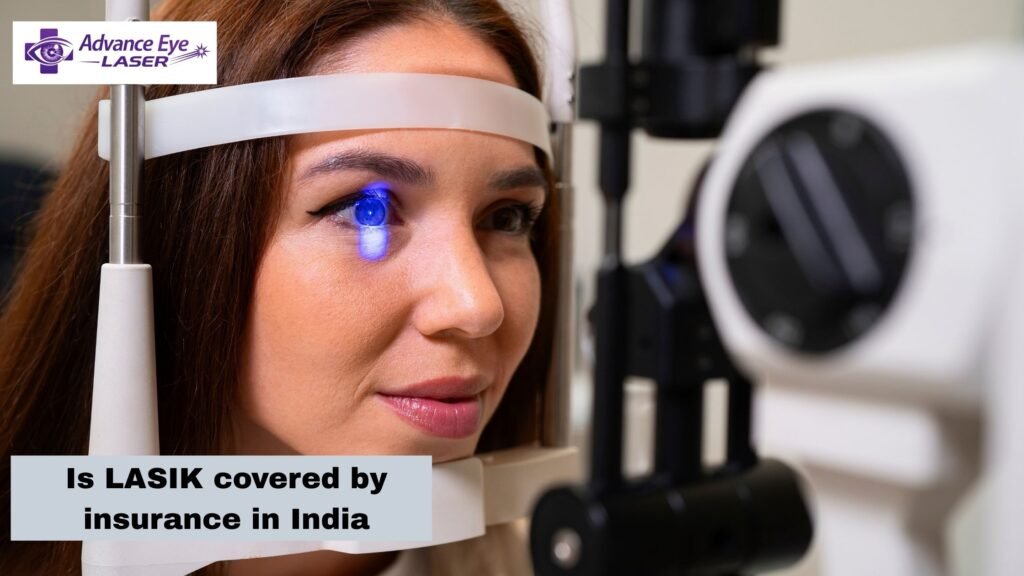
For people who wear glasses every day, LASIK can sound like a life-changing option. No more searching for spectacles in the morning, fewer worries about broken frames, and more freedom while travelling, exercising, or enjoying outdoor activities. But before deciding on laser eye surgery, there is one practical question that comes up quite often: Is LASIK covered by insurance in India?
The answer is not the same for everyone. Some health insurance policies may cover LASIK under specific conditions, while others exclude it completely. Your eligibility usually depends on the terms of your policy, the reason for undergoing the procedure, your eye power, and other conditions mentioned by the insurer.
Let’s understand how LASIK insurance coverage generally works in India.
Does Health Insurance Cover LASIK Surgery?
LASIK is not automatically covered by every health insurance plan in India.
In many cases, insurers consider LASIK an elective procedure when it is performed simply to reduce dependence on glasses or contact lenses. Because of this, several policies exclude refractive-error correction from their standard benefits.
However, there are policies where LASIK or refractive surgery can be covered when certain medical criteria are fulfilled. For example, some insurance plans may consider coverage when the refractive error crosses a particular limit specified in the policy.
This means you should not assume that LASIK is either always covered or always excluded. The actual policy wording is what matters.
When Can LASIK Be Covered by Insurance in India?
Insurance coverage may be available when the surgery meets the conditions mentioned in your health insurance policy.
Some policies may consider LASIK when:
- The refractive error is above the limit mentioned in the policy.
- There is a medical reason for choosing refractive surgery.
- Wearing spectacles or contact lenses is medically difficult or unsuitable.
- The required waiting period has been completed.
- The treatment is performed at an eligible hospital.
- Prior approval or pre-authorisation is obtained when required.
The exact requirements can differ considerably between insurance providers and individual plans.
For this reason, it is better to speak directly with your insurer before scheduling the procedure.
Is LASIK Covered for High Eye Power?
This is one of the most common questions asked by patients.
Some health insurance policies have a specific refractive-error threshold for LASIK coverage. A particular policy might mention a minimum level of eye power that must be present before the procedure becomes eligible.
For example, certain policies have used 7.5 dioptres as an eligibility threshold. But this is not a universal rule for all health insurance policies in India.
One person’s insurance policy may have different conditions from another person’s plan.
Therefore, having a high eye number does not automatically guarantee an approved LASIK claim. You need to check the exact conditions of your policy.
Why Do Some Insurance Companies Exclude LASIK?
The main reason is that LASIK is often viewed as an elective vision-correction procedure.
If someone can manage their eyesight with glasses or contact lenses, an insurer may consider laser correction a personal choice rather than medically necessary treatment.
Health insurance policies commonly contain exclusions for procedures that are considered cosmetic, experimental, or not medically necessary. Some policies specifically exclude refractive-error correction.
At the same time, insurance products are not identical. Certain plans can offer coverage for refractive surgery when defined medical conditions are satisfied.
So, reading the policy document is much more useful than relying on general information found online.
Does the Waiting Period Matter?
Yes, it can.
Some insurance policies have waiting periods before particular treatments become eligible for coverage. If your plan includes a waiting period for LASIK or refractive-error correction, you may not be able to claim the expenses immediately after purchasing the policy.
The waiting period varies according to the insurer and policy.
If you are thinking about buying insurance specifically because you are planning LASIK, check this point carefully. Buying a policy shortly before surgery does not necessarily mean the procedure will be covered.
Can You Claim Cashless LASIK Treatment?
Cashless treatment may be possible if your policy covers the procedure and the hospital is eligible under your insurer’s network or cashless arrangement.
However, cashless does not necessarily mean that every expense will be paid by the insurance company.
Your claim can still be affected by:
- Policy exclusions
- Sub-limits
- Deductibles
- Co-payment
- Waiting periods
- Coverage limits
- Non-payable hospital expenses
Before admission, ask the hospital’s insurance desk to verify your eligibility. You can also contact your insurance provider directly for confirmation.
What Documents Are Needed for a LASIK Insurance Claim?
If your policy allows a claim, the insurer may ask for medical and treatment-related documents.
Depending on the policy, these may include an eye examination report, doctor’s recommendation, prescription, diagnostic reports, treatment estimate, hospital documents, invoices, discharge papers, and insurance details.
For planned surgery, it is a good idea to ask the insurer what documents are required before undergoing treatment.
Keeping all reports and bills safely can also make the claim process easier.
What If Your Health Insurance Does Not Cover LASIK?
Don’t worry if your existing health insurance does not provide LASIK coverage. You can still discuss the procedure with an eye specialist and find out whether you are a suitable candidate.
The cost of LASIK varies from one centre to another. It can depend on the technology used, diagnostic tests, surgeon’s experience, type of procedure, and follow-up care.
Instead of choosing a procedure only because it is cheaper, first understand which treatment is appropriate for your eyes.
A detailed eye evaluation can help identify whether LASIK, another laser vision correction procedure, or continued use of spectacles or contact lenses is more suitable.
How to Check Your LASIK Insurance Coverage
Before booking surgery, follow these simple steps:
1. Read your policy document.
Search for terms such as LASIK, refractive error, refractive surgery, laser eye surgery, or vision correction.
2. Check the exclusions.
Your policy may specifically exclude refractive procedures.
3. Look for eligibility conditions.
Check whether your plan has a specific eye-power requirement.
4. Confirm the waiting period.
Make sure any applicable waiting period has been completed.
5. Ask about limits.
Find out whether the policy has a sub-limit or maximum payable amount.
6. Get written confirmation where possible.
For planned surgery, pre-authorisation can help you understand your coverage before you incur the expense.
Final Answer: Is LASIK Covered by Insurance in India?
LASIK may be covered by some health insurance policies in India, but it is not automatically covered under every plan.
Advance Eye Laser If the procedure is considered elective vision correction, your policy may exclude it. On the other hand, certain policies can provide coverage when specific medical conditions and eligibility requirements are satisfied.
Your eye power, medical necessity, waiting period, hospital eligibility, and policy terms can all play a role.